
You are now leaving the site
Are you sure you want to leave?
Are you sure you want to leave?
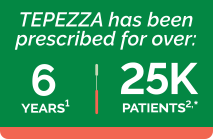
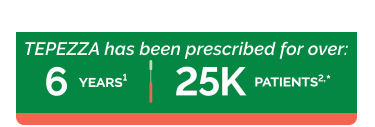
*Based on 25,062 individual patients enrolled in Amgen By Your Side who received at least 1 dose of TEPEZZA from 02/05/2020 – 11/14/2025. TED diagnosis is assumed based on initiation of TEPEZZA.
Phase 2/3 study (N=171): High disease activity, short-duration patients with CAS ≥43
9 out of 10
completed full course
of treatment with TEPEZZA3


Most adverse events were:3
Mild or moderate
Manageable
Resolved during or after treatment
Adverse reaction |
TEPEZZA n=84, n (%) |
Placebo n=86, n (%) |
|---|---|---|
|
Muscle spasms |
21 (25%) |
6 (7%) |
|
Nausea |
14 (17%) |
8 (9%) |
|
Alopecia |
11 (13%) |
7 (8%) |
|
Diarrhea |
10 (12%) |
7 (8%) |
|
Fatiguea |
10 (12%) |
6 (7%) |
|
8 (10%) |
1 (1%) |
|
|
8 (10%) |
0 |
|
|
Dysgeusia (taste disturbance) |
7 (8%) |
0 |
|
Headache |
7 (8%) |
6 (7%) |
|
Dry skin |
7 (8%) |
0 |
|
Weight decreased |
5 (6%) |
0 |
|
Nail disorderd |
4 (5%) |
0 |
|
Menstrual disorderse |
5 (23%) |
1 (4%) |
aFatigue includes asthenia.
bHyperglycemia includes blood glucose increase.
cHearing impairment including hearing loss (deafness, including sensorineural deafness, eustachian tube dysfunction, hyperacusis, hypoacusis, autophony, and tinnitus).
dNail disorder includes nail discoloration and onychoclasis.
eMenstrual disorders include amenorrhea, metrorrhagia, and dysmenorrhea. (TEPEZZA=22, Placebo=25).


Phase 2/3 study (N=84): High disease activity, short-duration patients with CAS ≥43
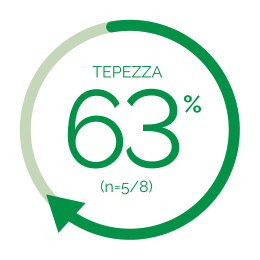
The majority of hyperglycemia events resolved during or shortly after treatment3
Of 8 total events, 6 resolved during treatment, 2 resolved after last dose3
Hyperglycemia was managed with medication5


In an observational study, patients at greatest risk of hearing impairment events caused by TEPEZZA:7,†
Were older age (>65) with a higher CAS
Had preexisting hearing issues
A hearing impairment event does not necessarily mean total hearing loss8
One small study observed a 15-fold increased risk compared to healthy controls*
*Based on 2012 observational study using pure-tone audiometry in 22 patients with Graves’ disease. Patients with TED were not included.


Researchers don’t know if affected patients had preexisting hearing issues
Hearing impairment does not necessarily mean total hearing loss8,10
Hearing may be unclear, distorted, or limited to certain sound ranges (eg, difficulty discerning higher-pitched noises)
In clinical studies, hearing impairment was typically mild/moderate and manageable4,6,11
In the Phase 2/3 and chronic TED studies, the majority of hearing events were managed without interrupting therapy
The PI recommends assessing hearing before, during, and after treatment.
†Results from a prospective observational study of 52 TED patients who completed a full course of TEPEZZA treatment. Data is not derived from a controlled clinical study and no conclusions of statistical or clinical significance can be drawn.7
CAS, clinical activity score.
Phase 4 study: Patients with CAS ≤1 with a TED diagnosis for 2–10 years at baseline12
>9 out of 10
completed treatment with TEPEZZA12
Most adverse events were:12
Mild or moderate
Manageable
Resolved during or after treatment
Adverse reaction |
TEPEZZA n=41, n (%) |
Placebo n=20,† n (%) |
|---|---|---|
|
Muscle spasms |
17 (42%) |
2 (10%) |
|
Fatigue |
9 (22%) |
2 (10%) |
|
9 (22%) |
2 (10%) |
|
|
Diarrhea |
8 (20%) |
4 (20%) |
|
Headache |
7 (17%) |
2 (10%) |
|
6 (15%) |
2 (10%) |
|
|
Dry skin |
5 (12%) |
0 |
|
Dysgeusia |
4 (10%) |
1 (5%) |
|
Infusion reaction |
2 (5%) |
3 (15%) |
|
Nausea |
2 (5%) |
1 (5%) |
|
Alopecia |
2 (5%) |
0 (0%) |
|
Nail disorder |
2 (5%) |
0 (0%) |
Phase 4 study: Patients with CAS ≤1 with a TED diagnosis for 2-10 years at baseline12
The majority of hyperglycemic events were managed with adjustment of medication with none leading to discontinuation of treatment12
‡One patient had a history of diabetes mellitus, and for 4 other patients, Day 1 of HbA1c values (range, 5.7%-6.0%) suggest the possibility of preexisting prediabetes/impaired glucose tolerance (prediabetes: HbA1c 5.7%-6.4%), as defined by the American Diabetes Association, 2019.
Phase 4 study: Patients with CAS ≤1 with a TED diagnosis for 2-10 years at baseline12
In an observational study, patients at the greatest risk of hearing impairment events caused by TEPEZZA:7,§
Were older age (>65) with a higher CAS
Had preexisting hearing issues
A hearing impairment event does not necessarily mean total hearing loss8
One small study observed a 15-fold increased risk compared to healthy controls*
*Based on 2012 observational study using pure-tone audiometry in 22 patients with Graves’ disease. Patients with TED were not included.
Researchers don’t know if affected patients had preexisting hearing issues
Hearing impairment does not necessarily mean total hearing loss8,10
Hearing may be unclear, distorted, or limited to certain sound ranges (eg, difficulty discerning higher-pitched noises)
In clinical studies, hearing impairment was typically mild/moderate and manageable4,6,11
In the Phase 2/3 and chronic TED studies, the majority of hearing events were managed without interrupting therapy
The PI recommends assessing hearing before, during, and after treatment.
§Results from a prospective observational study of 52 TED patients who completed a full course of TEPEZZA treatment. Data is not derived from a controlled clinical study and no conclusions of statistical or clinical significance can be drawn.7
CAS, clinical activity score; HbA1C, hemoglobin A1C.
For any additional questions regarding the safety profile or adverse events,
please speak with your Amgen Representative.
If you do not have an Amgen Representative, complete this form.

If you see patients with Thyroid Eye Disease, or T-E-D, you may be considering treating them with TEPEZZA, the first and only FDA approved treatment option for T-E-D regardless of disease duration or activity.1,2
TEPEZZA may cause infusion reactions. Infusion reactions may occur during an infusion or within 1.5 hours after an infusion.
One of the adverse events that occurred in TEPEZZA clinical trials was hearing impairment.1-3
First, let us look more closely at the data on hearing from the clinical trials.
TEPEZZA has a proven efficacy with a demonstrated safety and tolerability profile.1,2 TEPEZZA has been studied in 3 placebo-controlled clinical trials of high-activity and short duration and low-activity and long duration TED.1-3
Before we get started, please note that baseline hearing tests were not conducted for these trials.
Some patients taking TEPEZZA in clinical trials reported a range of hearing-related side effects, including hearing loss, deafness, including sensorineural deafness, eustachian tube dysfunction, hyperacusis, hypoacusis, autophony, and tinnitus.1,2
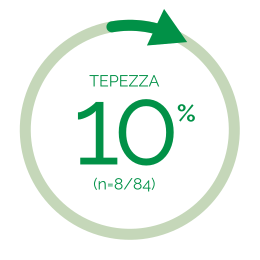
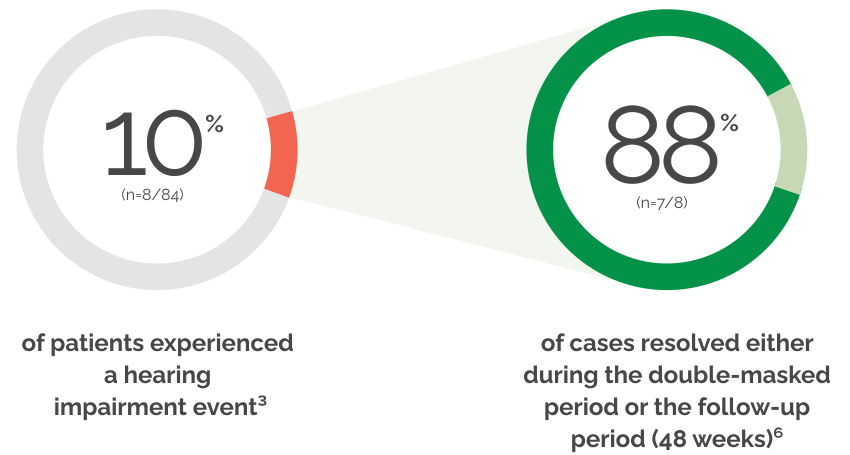
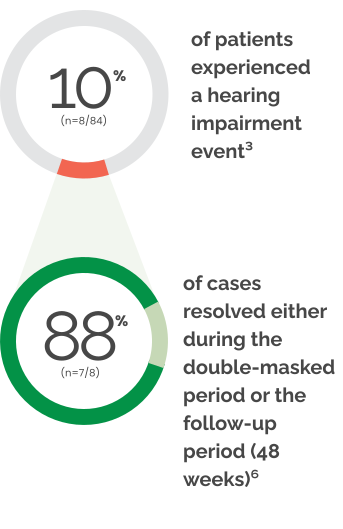
In the Phase 2 and 3 trials, approximately 10% (8 of 84) patients treated with TEPEZZA reported experiencing hearing impairment vs none of the 86 patients treated with placebo.1,3
Of the 8 patients who reported a hearing event in the double masked period, 7 had recovered/resolved, either during the double masked period or the follow-up period (48 weeks).3
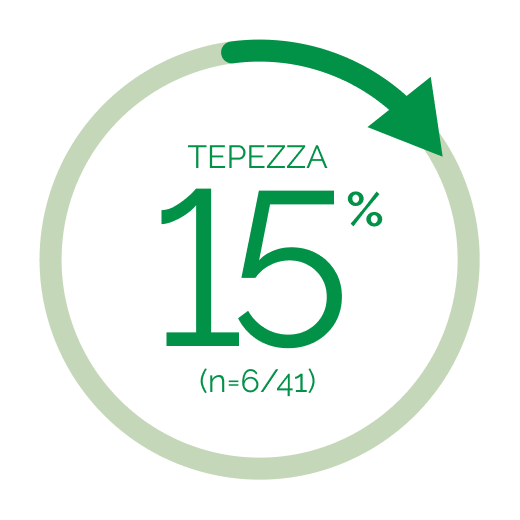
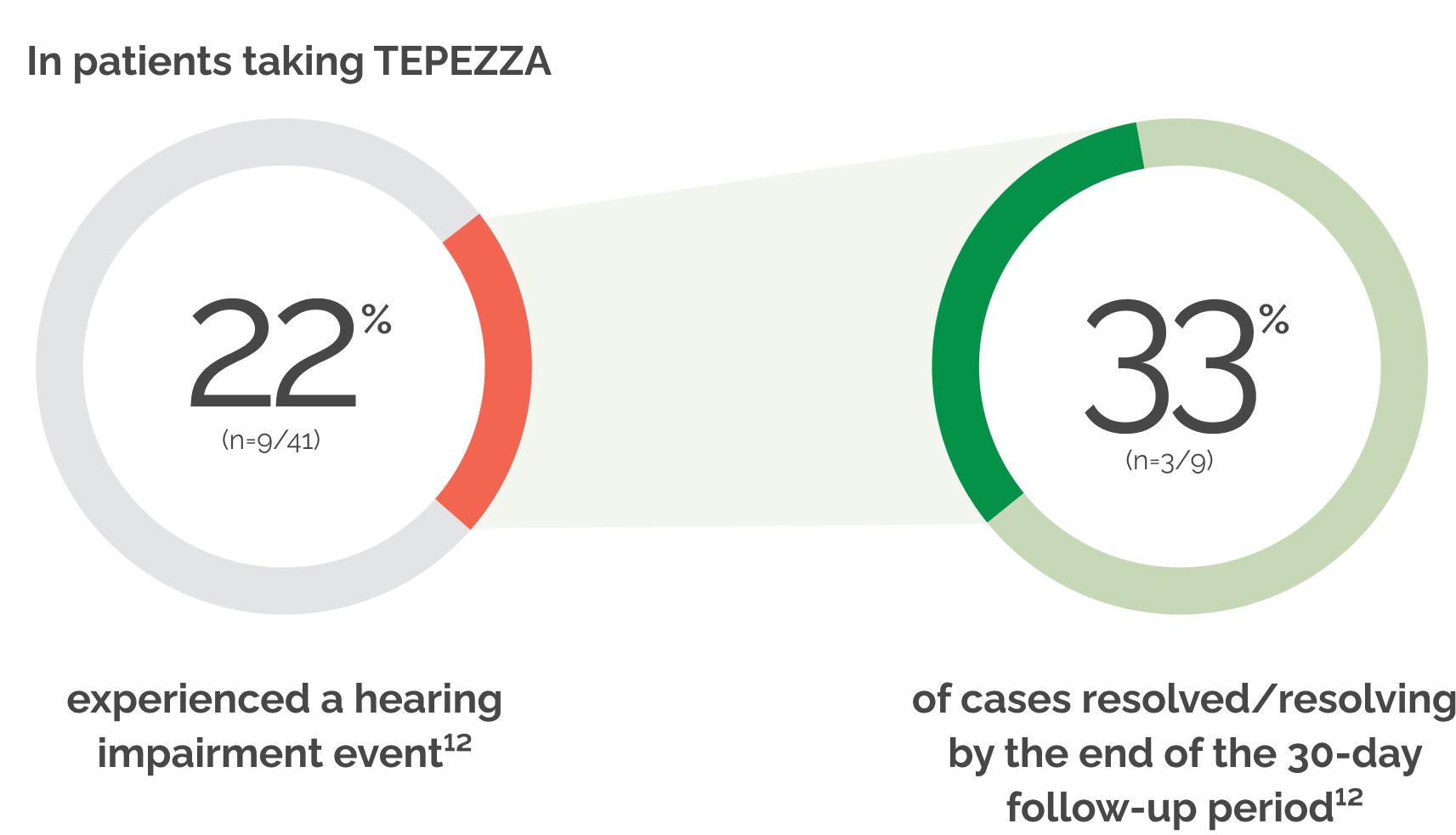
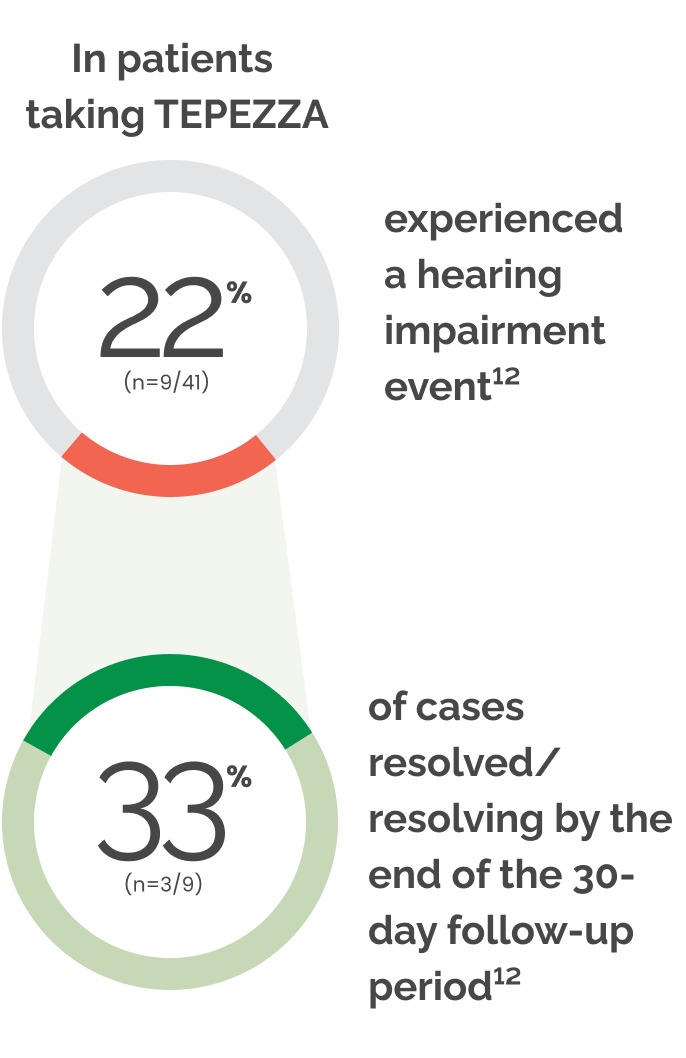
In the Phase 4 trial, approximately 22% (or 9 of 41) patients treated with TEPEZZA reported experiencing hearing impairment versus 10% (2 of 20) patients treated with placebo.2
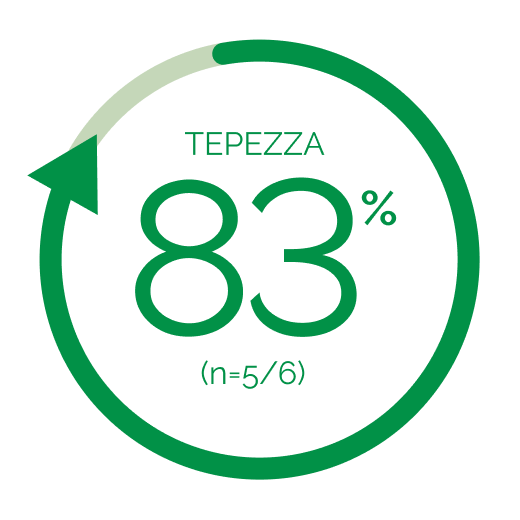
In the TEPEZZA-treated patients, 3 out of 9 cases of hearing impairment resolved or were resolving by the end of the follow-up period. Note that this follow-up period was only 30 days.2
One patient who reported a serious event of left ear conductive deafness during treatment was found to have a congenital anomaly.2
Most hearing events were mild or moderate, and a majority of the patients completed treatment.2,3
A separate observational study identified potential risk factors related to hearing impairment in 52 patients who completed a full course of TEPEZZA.4
Audiometry showed that approximately 38% (20 of 52) of these patients had hearing dysfunction at baseline.4
They found that patients reporting hearing impairment with TEPEZZA tended to be older and had higher baseline Clinical Activity Score (or C-A-S), along with preexisting hearing issues as assessed at baseline.4 Please note that, since this data was not derived from a controlled clinical study, no conclusions of statistical or clinical significance can be drawn.
IGF-1R is involved in the pathogenesis of Thyroid Eye Disease because it is overexpressed in TED orbital fibroblasts.5 TEPEZZA is designed to bind to IGF-1R and block its activation and signaling.1
By targeting IGF-1R in orbital fibroblasts, TEPEZZA reduces inflammation and decreases muscle and fat tissue remodeling and expansion behind the eye.6 Though the exact mechanism of hearing impairment with TEPEZZA is unknown, IGF-1 signaling provides a plausible link.5,7,8
Among other signaling pathways in various extraorbital tissues, IGF-1R and IGF-1 are also linked to the maintenance of hearing function.7,9,10
IGF-1 is involved in the maintenance of the number of inner and outer hair cells, it potentially has a protective and proliferative effect on the cochlea, and regulates the timing of sensory cell differentiation.9
Sensorineural hearing loss can occur in patients with IGF-1 deficiency.7,9,10 Although there is more to learn about the role of IGF-1 signaling in hearing, it may provide a link between hearing impairment and TEPEZZA.
Studies have suggested that patients with Graves' disease can experience a decrease in hearing ability, especially at higher frequencies.11,12
The FDA-approved label for TEPEZZA states to evaluate patients’ hearing before, during, and after treatment with TEPEZZA.1
It is important to have a conversation with your patients prior to treatment with TEPEZZA to set expectations and ensure you have a monitoring plan in place.
There is a risk of hearing impairment with TEPEZZA. I think it's important to note that it doesn't always mean hearing loss or sensorineural hearing loss or deafness, other side effects such as tinnitus or ringing in the ears or muffling in the ears, which can sound like somebody's underwater.
If you were thinking about starting your patient on TEPEZZA, I would recommend establishing a protocol for monitoring for hearing impairment. I would first counsel the patient about potential risks, benefits associated with TEPEZZA, and hearing-related side effects. I would then also ensure that patients have a protocol for baseline audiology testing, audiology testing after the fourth infusion, and again, repeat audiology testing at the end of treatment, and I gather the data and review it together with the patient.
One thing that I've done in my practice is that I have established good rapport with a few local audiologists. In my experience, patients that have hearing-related side effects do tend to have improvement or resolution of those symptoms after treatment is completed.
One of the things I’m doing is I’m getting a baseline audiogram and through the course of the TEPEZZA infusions, I’d meet with the patient in subsequent visits, and I do always ask about hearing changes and if they have noticed any change in their hearing. If they do, we do get a confirmatory audiogram.
I’m at an academic hospital, so I’m lucky in that I have all specialties under one roof. So, I commonly will do audiology consults now for thyroid eye disease patients. I have ear, nose, and throat colleagues around the corner that I can send patients to, to get formal evaluations of their hearing should we notice that there is a deficit, and to make sure there’s no other problems which could be contributing to their hearing changes.
I think it's really important to counsel patients on hearing. As my practice has evolved over the five years, I really find that it's best for patients that they get into the formal audiology center. And the reason for that is if a patient has noticed any changes in their hearing, now we have some sort of quantitative factor where I can compare what their hearing was.
In addition, I find that it's really helpful for patients because when they've gone in and had a formal hearing study, now they're already established at a location. So, if there's issues now, they are not panicked about where to go, but they know to go back to the same facility again.
IMPORTANT SAFETY INFORMATION
WARNINGS AND PRECAUTIONS
Infusion Reactions: TEPEZZA may cause infusion reactions. Infusion reactions have been reported in approximately 4% of patients treated with TEPEZZA. Reported infusion reactions have usually been mild or moderate in severity. Signs and symptoms may include transient increases in blood pressure, feeling hot, tachycardia, dyspnea, headache, and muscular pain. Infusion reactions may occur during an infusion or within 1.5 hours after an infusion. In patients who experience an infusion reaction, consideration should be given to premedicating with an antihistamine, antipyretic, or corticosteroid and/or administering all subsequent infusions at a slower infusion rate.
Inflammatory Bowel Disease: TEPEZZA may cause an exacerbation of inflammatory bowel disease (IBD). IBD has been reported in some patients without a prior diagnosis of IBD. Monitor patients for signs and symptoms of IBD. If IBD exacerbation is suspected, discontinue use of TEPEZZA.
Hyperglycemia: Increased blood glucose or hyperglycemia may occur in patients treated with TEPEZZA. In clinical trials, 10% of patients (two-thirds of whom had preexisting diabetes or impaired glucose tolerance) experienced hyperglycemia. Hyperglycemic events should be controlled with medications for glycemic control, if necessary. Assess patients for elevated blood glucose and symptoms of hyperglycemia prior to infusion and continue to monitor while on treatment with TEPEZZA. Ensure patients with hyperglycemia or preexisting diabetes are under appropriate glycemic control before and while receiving TEPEZZA.
Hearing Impairment Including Hearing Loss: TEPEZZA may cause severe hearing impairment including hearing loss, which in some cases may be permanent. Assess patients’ hearing before, during, and after treatment with TEPEZZA and consider the benefit-risk of treatment with patients.
ADVERSE REACTIONS
The most common adverse reactions (incidence ≥5% and greater than placebo) are muscle spasm, nausea, alopecia, diarrhea, fatigue, hyperglycemia, hearing impairment, dysgeusia, headache, dry skin, ear discomfort, weight decreased, nail disorders, and menstrual disorders.
INDICATION
TEPEZZA is indicated for the treatment of Thyroid Eye Disease regardless of Thyroid Eye Disease activity or duration.
Please see Full Prescribing Information for more information.
WARNINGS AND PRECAUTIONS
Infusion Reactions: TEPEZZA may cause infusion reactions. Infusion reactions have been reported in approximately 4% of patients treated with TEPEZZA. Reported infusion reactions have usually been mild or moderate in severity. Signs and symptoms may include transient increases in blood pressure, feeling hot, tachycardia, dyspnea, headache, and muscular pain. Infusion reactions may occur during an infusion or within 1.5 hours after an infusion. In patients who experience an infusion reaction, consideration should be given to premedicating with an antihistamine, antipyretic, or corticosteroid and/or administering all subsequent infusions at a slower infusion rate.
Inflammatory Bowel Disease: TEPEZZA may cause an exacerbation of inflammatory bowel disease (IBD). IBD has been reported in some patients without a prior diagnosis of IBD. Monitor patients for signs and symptoms of IBD. If IBD exacerbation is suspected, discontinue use of TEPEZZA.
Hyperglycemia: Increased blood glucose or hyperglycemia may occur in patients treated with TEPEZZA. In clinical trials, 10% of patients (two-thirds of whom had preexisting diabetes or impaired glucose tolerance) experienced hyperglycemia. Hyperglycemic events should be controlled with medications for glycemic control, if necessary. Assess patients for elevated blood glucose and symptoms of hyperglycemia prior to infusion and continue to monitor while on treatment with TEPEZZA. Ensure patients with hyperglycemia or preexisting diabetes are under appropriate glycemic control before and while receiving TEPEZZA.
Hearing Impairment Including Hearing Loss: TEPEZZA may cause severe hearing impairment including hearing loss, which in some cases may be permanent. Assess patients’ hearing before, during, and after treatment with TEPEZZA and consider the benefit-risk of treatment with patients.
ADVERSE REACTIONS
The most common adverse reactions (incidence ≥5% and greater than placebo) are muscle spasm, nausea, alopecia, diarrhea, fatigue, hyperglycemia, hearing impairment, dysgeusia, headache, dry skin, ear discomfort, weight decreased, nail disorders, and menstrual disorders.
INDICATION
TEPEZZA is indicated for the treatment of Thyroid Eye Disease regardless of Thyroid Eye Disease activity or duration.
Please see Full Prescribing Information for more information.
1. U.S. Food and Drug Administration. FDA approves first treatment for thyroid eye disease [Press release]. January 1, 2020. https://www.fda.gov/newsevents/pressannouncements/fda-approves-first-treatment-thyroid-eye-disease. 2. Data on File. Amgen, November 2025. 3. Kahaly GJ, Douglas RS, Holt RJ, et al. Teprotumumab for patients with active thyroid eye disease: a pooled data analysis, subgroup analyses, and off-treatment follow-up results from two randomised double masked placebocontrolled multicentre trials. Lancet Diabetes Endocrinol. 2021;9(6):360-372. 4. TEPEZZA (teprotumumab-trbw) [prescribing information] Amgen. 5. Smith TJ, Cavida D, Hsu K, et al. Glycemic trends in patients with thyroid eye disease treated with teprotumumab in 3 clinical trials. Ophthalmology. 2024;131(7):815-826. 6. Smith TJ, Assessment of hearing dysfunction in patients with Graves' disease and thyroid eye disease without or with teprotumumab. J Clin Endocrinol Metab. 2024;1-9. 7. Douglas RS. A prospective study examining audiometry outcomes following teprotumumab treatment for thyroid eye disease. Thyroid. 2024;32(1):134-137. 8. National Institutes of Health. NIDCD fact sheet hearing and balance auditory neuropathy. 2016;1-4. 9. Berker D, Karabulut H, et al. Evaluation of hearing loss in patients with Graves' disease. Endocrine. 2012;41:116-121. 10. Motlagh Zadeh L, Silbert NH, Sternasty K, Swanepoel W, Hunter LL, Moore DR. Extended high-frequency hearing enhances speech perception in noise. Proc Natl Acad Sci USA. 2019;116(47):23753-23759. 11. Supplement to Douglas RS, Couch S, Wester ST. et al. Efficacy and safety of teprotumumab in patients with thyroid eye disease of long duration and low disease activity. J Clin Endocrinol Metab. 2024;109(1):25-35. 12. Douglas RS, Couch S, Wester ST, et al. Efficacy and safety of teprotumumab in patients with thyroid eye disease of long duration and low disease activity. J Clin Endocrinol Metab. 2024;109(1):25-35.